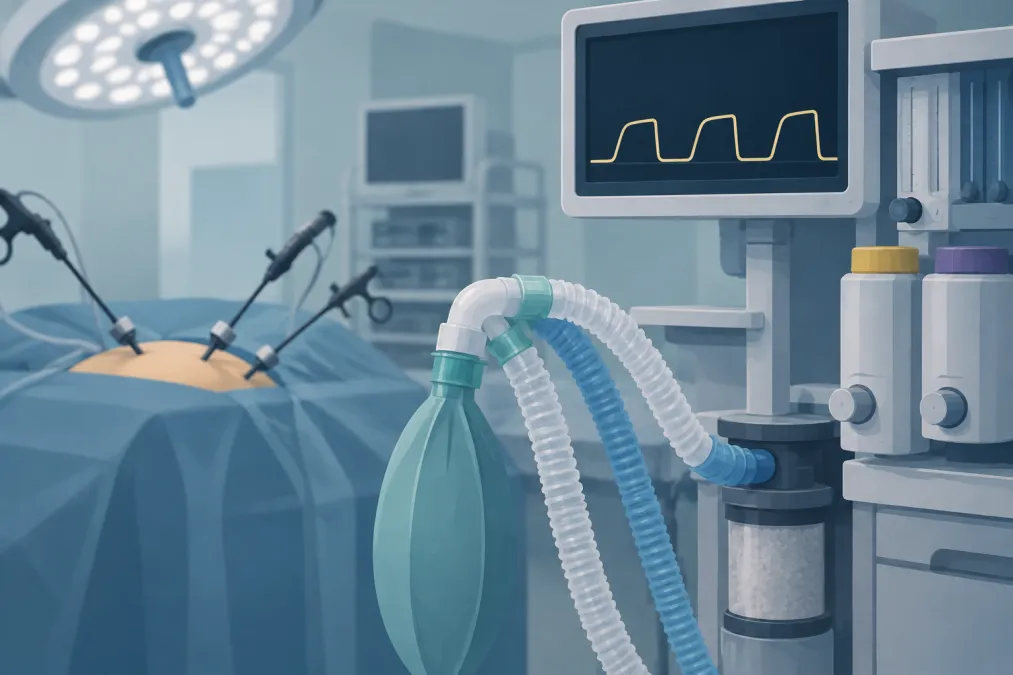
Imagine the pneumoperitoneum is established and sevoflurane is running. End-tidal carbon dioxide (EtCO₂) climbs despite increased minute ventilation. The heart rate follows, then generalized rigidity appears. Core temperature is only mildly raised. What do you do first?
Malignant hyperthermia (MH) is a clinical diagnosis. A persistent, unexplained rise in EtCO₂ with tachycardia or rigidity after exposure to a trigger is enough to start treatment; fever may develop later. Stop triggering agents, declare an emergency, call for help, give 100% oxygen at high flow, increase minute ventilation and prepare dantrolene. Investigate in parallel.
Why the rising EtCO₂ matters
MH is a hypermetabolic reaction in skeletal muscle, usually triggered by volatile anesthetic agents or succinylcholine in a susceptible person. Excess calcium release drives sustained muscle contraction and metabolism. Carbon dioxide production and oxygen consumption rise; respiratory and metabolic acidosis, hyperkalemia, heat production and muscle breakdown can follow.
In a mechanically ventilated patient, the extra CO₂ may appear as a rising EtCO₂ even after you increase minute ventilation. Unexplained tachycardia, ventricular ectopy, sweating, mottling and generalized rigidity strengthen the concern. Hyperkalemia, a rapid rise in core temperature, elevated creatine kinase (CK) and myoglobinuria may follow. Waiting for a dramatic fever is a classic exam trap.
An uneventful previous anesthetic does not rule out MH. Nor does one isolated high EtCO₂ prove it. Recognize the developing pattern, consider plausible mimics in parallel and act before confirmation.
Check the circuit without losing time
While treatment begins, have another team member make a brief, structured check. Confirm that the ventilator is delivering the intended minute ventilation and that the endotracheal tube and sampling line are patent. Inspect the capnogram and inspired CO₂, and check the absorber, valves, fresh-gas flow and breathing system for rebreathing or equipment failure. These checks should not delay dantrolene or other immediate treatment.
Laparoscopy complicates the picture because CO₂ is absorbed from the pneumoperitoneum and may require increased ventilation. Consider the timing: did the rise follow insufflation or a change in insufflation pressure? Does it settle after ventilation is increased, or does it continue? A laparoscopic explanation becomes less convincing when a persistent CO₂ rise appears with tachycardia, rigidity, mottling or evolving acidosis.
Imagine EtCO₂ rises shortly after insufflation. You increase minute ventilation and check the circuit. If the level stabilizes and there are no other signs, CO₂ absorption or a mechanical cause remains plausible. If EtCO₂ keeps climbing and the patient becomes tachycardic and rigid, treat for MH while the team continues its assessment. The question is not whether laparoscopy can raise CO₂—it can—but whether it explains the whole clinical picture.
Obtain a blood gas, potassium, glucose, CK, myoglobin, renal function and coagulation studies; check liver function as the crisis evolves. Monitor core temperature, electrocardiography and urine output. Repeat investigations to track severity and complications. They do not confirm or exclude MH quickly enough to decide whether to start treatment.
Declare the crisis and treat in parallel
Once the pattern is concerning, state clearly that you suspect an MH crisis. Ask the surgeon to stop or pause the procedure if feasible. Divide the work: one person leads, one manages ventilation, one prepares dantrolene, and others obtain blood tests, monitor complications and arrange critical-care support.
The immediate sequence is:
- Stop volatile anesthetics and do not administer succinylcholine. Remove the vaporizer. If anesthesia must continue, use a non-triggering intravenous technique, such as total intravenous anesthesia.
- Call for help and bring the MH cart and dantrolene. Ask the surgeon to stop or postpone surgery where possible.
- Ventilate with high-flow 100% oxygen and increase minute ventilation to about two to three times normal initially.
- Give intravenous dantrolene 2–2.5 mg/kg based on actual body weight, up to 300 mg per dose. Repeat every 10 minutes until PaCO₂ is below 6 kPa with normal minute ventilation and core temperature is falling.
- Use activated charcoal filters on the inspiratory and expiratory limbs if available. Do not delay treatment to change the circuit or anesthesia machine.
A total dantrolene dose above 10 mg/kg may be needed. If escalating doses produce little response, confirm drug delivery and reconsider the differential while continuing indicated treatment.
Treat the complications as they emerge
Dantrolene treats the underlying muscle hypermetabolism, but its complications need active management. If core temperature is elevated, use surface cooling and chilled intravenous crystalloid; stop active cooling as the temperature approaches normal to avoid overshoot.
Treat hyperkalemia promptly using the local emergency protocol. Intravenous insulin with dextrose shifts potassium into cells; intravenous calcium is used for life-threatening electrocardiographic effects. A beta₂ agonist or dialysis may be needed in refractory cases. Improve ventilation toward normocapnia to address acidosis; if pH is below 7.2, the European Malignant Hyperthermia Group advises intravenous sodium bicarbonate or another buffer. Correct hyperkalemia and acidosis when treating dysrhythmias, and avoid calcium-channel blockers during dantrolene treatment.
Rhabdomyolysis can lead to myoglobinuria and acute kidney injury. Follow potassium, CK, renal function, urine appearance and output, and coagulation. Look for disseminated intravascular coagulation and, when muscle injury is severe, compartment syndrome. The capnogram may improve before these complications have settled, so improvement in the operating room is not the end of the crisis.
Continue care after the crisis settles
Transfer the patient to critical care or an equivalent continuously monitored setting. The European Malignant Hyperthermia Group recommends at least 24 hours of monitoring; MHAUS advises ICU monitoring for at least 36 hours after an MH event. Follow the local MH protocol. MHAUS also recommends continued intravenous dantrolene after initial control, typically at least 1 mg/kg every 4–6 hours for at least 24 hours, adjusted to the clinical course.
Watch for recrudescence: renewed hypercarbia, temperature rise, rigidity, tachycardia or metabolic disturbance after initial improvement. If MH signs recur, give further dantrolene and continue treatment according to the crisis protocol. Follow serial blood gases, electrolytes, CK, renal function, urine output and coagulation.
Document the event clearly and refer the patient to an MH diagnostic center. Specialist assessment may include genetic testing and in vitro muscle contracture testing. A negative genetic result alone does not necessarily exclude susceptibility. Discuss implications for relatives and advise the patient to tell future anesthesia teams about the suspected episode. Until susceptibility is clarified, plan a trigger-free anesthetic and prepare the workstation appropriately. Preoperative dantrolene is not recommended for suspected or susceptible patients having trigger-free anesthesia.
In a viva, state the immediate actions before exploring the differential in detail. A repeatable viva answer structure helps keep the response clear under pressure; use the relevant exam guide for your examination’s format. For spoken rehearsal, the Final/Advanced Anesthesia Structured Oral Examination (SOE) offers case-based practice.
The decision that matters
When EtCO₂ rises despite increased ventilation, do not anchor on the pneumoperitoneum or wait for fever. Check the circuit quickly while treatment begins, recognize the wider pattern and treat suspected MH as you investigate. Then stay with the patient through the complications, recurrence risk and specialist follow-up.
Frequently asked questions
What is an early sign of malignant hyperthermia during anesthesia?
A persistent rise in end-tidal CO₂ despite increased minute ventilation is an important early sign, often accompanied by unexplained tachycardia or muscle rigidity. Do not wait for a high temperature before treating a convincing pattern.
How do you distinguish malignant hyperthermia from CO₂ absorption during laparoscopy?
Pneumoperitoneum can increase CO₂ absorption and raise end-tidal CO₂. Check the timing, ventilation and breathing system quickly. A continuing rise despite increased ventilation, especially with tachycardia, rigidity or acidosis, makes malignant hyperthermia more concerning and warrants treatment while assessment continues.
What is the dantrolene dose for an acute malignant hyperthermia crisis?
The European Malignant Hyperthermia Group recommends 2–2.5 mg/kg IV based on actual body weight, up to 300 mg per dose. Repeat every 10 minutes until the hypermetabolic response resolves. A total dose above 10 mg/kg may be needed; if so, reassess the differential while continuing indicated treatment.
How long should a patient be monitored after a malignant hyperthermia crisis?
Use a continuously monitored critical-care setting and follow the local malignant hyperthermia protocol. The European Malignant Hyperthermia Group recommends at least 24 hours of monitoring; MHAUS advises ICU monitoring for at least 36 hours after an event.
What follow-up is needed after a suspected malignant hyperthermia crisis?
Refer the patient to a malignant hyperthermia diagnostic center for specialist assessment, which may include genetic testing and in vitro muscle contracture testing. Discuss implications for relatives and ensure future anesthetics avoid triggering agents until susceptibility has been clarified.
References
Show 9 references
- Recognising and managing a malignant hyperthermia crisis (v2024)
- Managing A Crisis
- Post Acute Phase
- Post Operative Procedure
- Post-MH Event Plan and Counseling
- Perioperative Management of MH Suspected or Susceptible Patients
- Laboratory diagnosis of MH susceptibility
- European Malignant Hyperthermia Group 2025 guidelines for the investigation of malignant hyperthermia susceptibility
- Current Concepts in Intraoperative Ventilation during Anesthesia for Laparoscopic and Robot–Assisted Surgery – a Narrative Review